diary by Edward Mullany

feb4frame4.jpg

The other night, on our way to the bar, my friend and I passed a house that had out front, as part of its Christmas decorations, one of those nativity scenes where the figures and the animals are made of a plastic mold that is lit from within by a bulb you cannot see, but that you know must be there, for the way it enlivens the colors on the surface, and draws your attention in the dark, though we didn’t stop, but kept on going, intent as we were on convincing each other of the opinions we held in a debate we were having, about one subject or another, though a few hours later, once we’d finished drinking, and happened to pass through that neighborhood again, on our way to an entrance to the subway, we stopped for a minute and looked at the scene, which was pleasant to stand beside, and regard without hurry, though we couldn’t think of anything to say, for we’d spent ourselves in conversation, though my friend made me laugh when he reached out and touched the donkey’s face.   


diary by Edward Mullany

feb3frame9.jpg

I woke early this morning, when it was dark, and I couldn’t fall back asleep, so I got up and pulled on my clothes and left my apartment and went down the stairwell of the building and out through the vestibule to the sidewalk outside, where I could hear, once I was heading in the direction of the bridge I wanted to cross, so I could reach the other side, and wander that part of the city that is busy during the day, but at this hour would be deserted, the wailing of sirens that seemed to reach me from a long way off, and that produced in me a mournful feeling, so that I began to wonder for whom they had been summoned, and for what reason, though after I was on the bridge, where the wind was up, so that I’d lowered my head and had buried my face in my jacket, and was out over the water, I could no longer hear them, and my mind became occupied with other things.

diary by Edward Mullany

feb1frame2.jpg

Sometimes, when I go to the museum with my friend, she gets bored before I do, though she doesn’t tell me right away, but continues to wander with me from room to room, though no longer in an orbit that’s distinctly her own, but rather in a lethargic, almost dissociative way, so that I’m always aware of her presence, and she’s always beside me, not unlike a child, where if I stop and turn to her and say her name and smile, I can see her eyes come back into focus, from wherever they’ve been, as if, in order to maintain her demeanor, in this place where people are looking at art, to which she no longer has the wherewithal to attend, though generally she likes it, and for a time will find it absorbing, she has yielded completely to daydream.  

diary by Edward Mullany

jan30frame2.jpg

In the past, when I wrote more fiction than I do today, I was obsessed with the image of a corridor underground, with doors on either side, all of which were locked except for one of them, though even that one, if you found it and opened it, delivered you into another corridor, just like the first one, that went on interminably, with doors on either side, all of which were locked except for one of them, and so on.

diary by Edward Mullany

jan28frame.jpg

On the floor in a room in a museum in a city that my friend and I did not live in, but that we happened to be traveling through, on our way to somewhere else, an artist who’d been commissioned to do an installation that a curator said was site-specific had made piles of different-colored paper clips, some of which appeared to have been shifted by museumgoers who’d visited before us, or to have settled, without interference, into heaps that were less prominent than they might’ve been when the artist had arranged them, so that we could see how they’d slipped from mounds into puddles, and even how individual paper clips had slid away from their families, or mates, and now were alone in some no-man’s land, or stray territory, so that my friend, who said she felt sorry for these ones, in fact picked one up and carried it back to the pile where she guessed it must have originated, though after we’d left, and were in the car again, and were back on the highway, and going wherever it was we were going, she opened her hand and revealed that she’d also taken one with her, as a keepsake, she said, though a few weeks later, when we’d returned from our trip, and I was looking for an item that I’d thought I’d forgotten in the car, I discovered the paper clip underneath her seat, where she must’ve dropped it at some point when she’d fallen asleep, so I took it with me and brought it up to my apartment, and am using it now to hold together some papers I keep in my desk.      

diary by Edward Mullany

jan26frame5.jpg

There is, of course, such a thing as a muse, but it does not come to you, as I think many people suppose, or have been led to imagine, but rather you go to it, where it always is, not in a place, or a location, but in a realm that is interior to yourself, and that can be accessed wherever you happen to be, whenever you are ready, provided you have some quietude and calm, and perhaps a gentleness of spirit, which is not to say a timidness, or a love for the sentimental, though this muse does not give you anything except the very feeling of which it is made, and which is never exhausted, but which you must transform, by way of your talent, and the medium in which you practice, into an expression that could be no one’s but yours.  

diary by Edward Mullany

jan25frame.jpg

I once saw a documentary in which a submarine equipped with a special camera descended to the deepest part of the ocean, where the water seems pitch black, so far is it from any source of light, though even here there were creatures swimming about, looking for food, and trying to avoid becoming food for something else, so that I began to wonder, after the sub had returned to the vessel on the surface, and the man who was doing the voiceover had begun to talk about a different subject, though still about the ocean in general, whether any of the crustaceans or jellyfish they’d shown were still alive today, after the program had aired, and, if so, what they were doing, for they’d have no idea that myself and other people had been watching them, and had thought about their lives, and that, in a way, this broadcast had made them famous. 

diary by Edward Mullany

jan22frame3.jpg

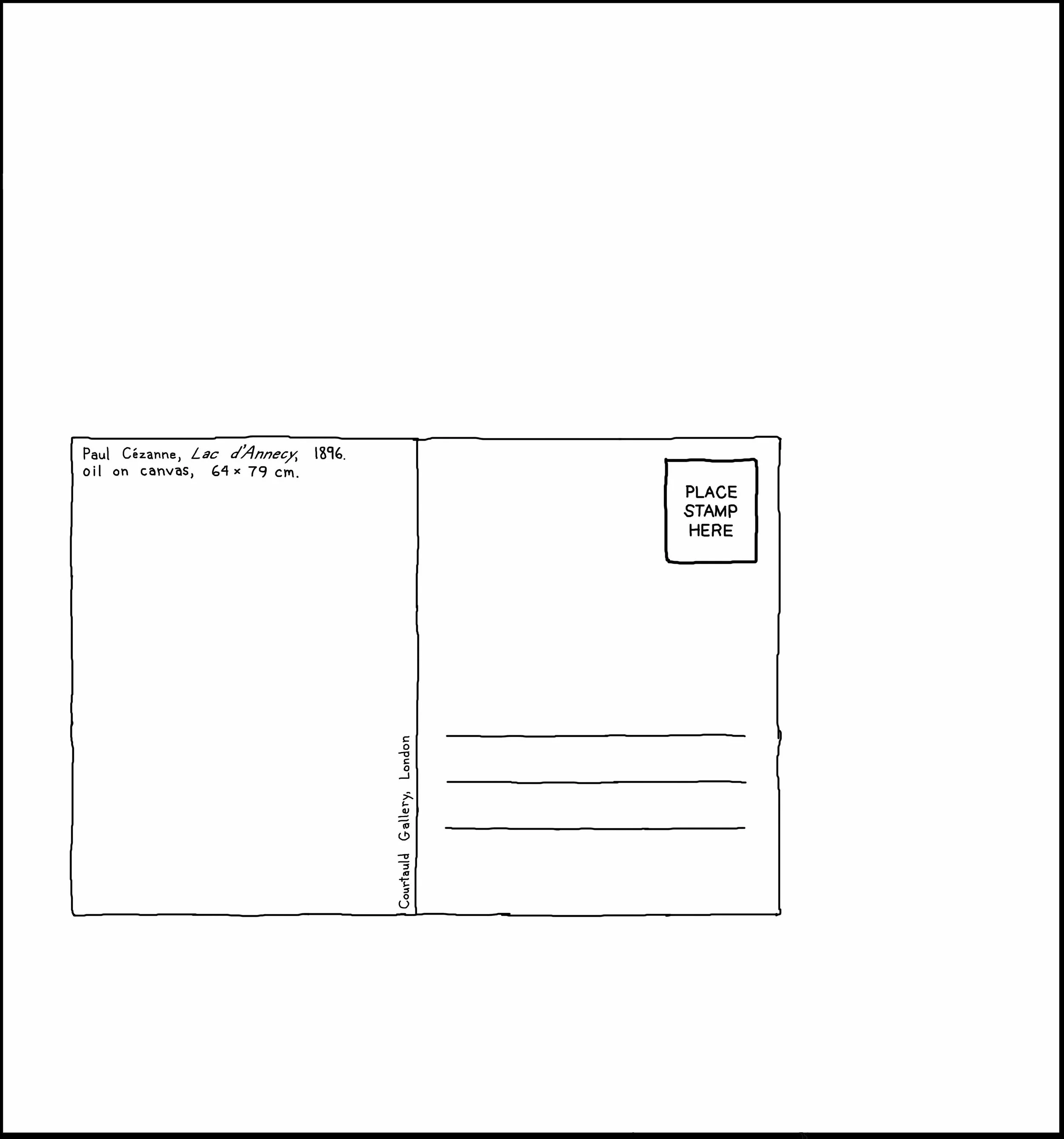
I recently mailed a postcard to a friend who lives in a different country, and on the back of the postcard, where there is space to write whatever you feel like writing, I made a few remarks about the painting that had been reproduced on the front, though when I realized that I was running out of room, and that there were other things I wanted to say, I began to print the sentences at a smaller scale, so that the handwriting became cramped, and not as easy to read, though before I put a stamp on it, and dropped it in the mailbox at the end of my street, I read back to myself what I’d written, pretending it was me who’d received the postcard, and not the somebody to whom I was going to send it, and I discovered that what I’d written was legible enough, and figured that my friend would be able to comprehend my meaning, even if she had to guess at a word or two, or look at the lettering closely before distinguishing the shapes and the punctuation.

diary by Edward Mullany

jan19frame4.jpg

This diary is what you might call sui generis, meaning, of its own genre, though to say so of a work is usually left to the critics, or at least to the reading public, rather than to the author of the work itself, in this case me, though I feel no hesitation in breaking with this custom, even if to do so causes me to seem presumptuous, or more confident than I ought to be in my ability to judge my own work, as one of the reasons I undertook this project was to rid myself of the need for critics, or, anyway, of the desire to be noticed by them, not because I’m against them, or because I think there is no role for them, but in fact because I am one, or count myself among them, whether I am one or not, insofar as the faculty that is most evident to me, in my work, is not the imaginative, or the lyrical, though both of these might be present to a degree, and would be present for certain were I primarily a poet, or a writer of fictions, but that which I’d call the comparative, or the differentiative, which seeks to distinguish that which is true from that which purports to be true, but isn’t.

diary by Edward Mullany

jan20frame4.jpg

But enough about poems. What I really ought to be talking about is life, so that I can see, as my thoughts reveal themselves on the screen in front of me, as I type them, what those thoughts are, though I’m not certain I’d know where to begin if someone said to me, ok, now go ahead, speak, for one’s thoughts are often obscure, even to one’s self, and so deeply buried in one’s consciousness, and so dependent on other thoughts, which likewise are dependent on others, and so on, that what shows in their expression, as one gives them utterance, is not their totality, but only as much of them as one is able to grasp, and pull to the surface, as if one’s mind were a plot of land whose root systems cannot be fathomed, and in whose soil some things grow because they have been planted, and other things grow because they were there before the ground was even tilled, and yet other things grow because the seeds from which they originate were carried by a gust of wind that arrived from a long way off, and happened to deposit them there, which isn’t to say those things don’t belong, but only that their provenance must be traced if one is to establish how one ought to feel about them, let alone whether one ought to abide by them, or act on them.

diary by Edward Mullany

jan18frame3.jpg

There’s a book of poems I’ve never read, but that I sometimes think of for its title, The Tears of the Blind Lions, which I like because of the image it evokes for me, and for the way it makes me wonder about these lions, and ask myself if their tears are in response to their blindness, meaning, are these lions sad because they cannot see, or have they been blinded by their tears, so that their vision ordinarily is fine, and they aren’t without sight in any permanent sense, but only temporarily, due to the water streaming from their eyes, or have they, in a third scenario, already been blind a long time, and are accustomed to it, and are weeping for some other reason, one that has nothing to do with their inability to see, but that is separate, and unknown to us?

diary by Edward Mullany

jan17frame3.jpg

If it were possible to write a novel in which there were no characters, but only a setting, with weather and the elapsing of time, so that, in order to maintain a reader’s interest, the writer would have to make do without any conflict except that which involves, I suppose, the resistance shown by objects to their own deterioration, the way a table must settle under the weight of a pile of books, for example, or how a fence on an acre of farmland begins to sag so incrementally that no one notices until the fence can no longer be righted, and eventually must fall, or be toppled…yes, if it were possible to write such a novel, without any conflict but that which I’ve described, though I’m not certain that what I’ve described is even conflict, as both a table and a fence are manmade, and thus are imbued with a resistance that isn’t their own, but rather is that of the design dreamed up, or intended, by the individuals who put the materiality of these objects into their current form, so that they might not be resisting anything, these objects, but are merely abiding by gravity, or the conditions of their molecular structure…but yes, if it were possible to write such a novel, where no characters could be found, not because characters aren’t interesting, but rather because they don’t comprise everything that is interesting, I guess I would try to write it.   

diary by Edward Mullany

jan10frame.jpg

One tends to hear less about Milton’s Paradise Regained than one hears about his Paradise Lost, just as one tends to hear less about Dante’s Paradiso and Purgatorio than one hears about his Inferno, even though, in the case of both poets, it is the work in its totality, rather than in its parts, that conveys the fullness of the artistry of that poet’s project, and of that poet’s attempt at dramatizing truth, which makes one wonder, I think, about the inclinations of human curiosity, as evidenced by what history has shown to have taken hold in the public imagination, which seems to want to be plunged, at least in these instances, in the wisdom found in literature that features the diabolic in all its falsity and ruin, and yet with a sort of grandeur, rather than literature where that same diabolic is felt, or represented, but is given less stage time, or is portrayed in unequivocal defeat.

diary by Edward Mullany

jan9frame3.jpg

This morning, after I’d made coffee, but before I’d sat down at my desk, where the computer is at which I write, I stood at the window that looks out over the courtyard between the building I live in and the buildings on the other side, and saw, in the window of an apartment across from mine, a person who happened to be doing what I was doing, standing and looking out, with a vacant expression on their face, and a mug of coffee in their hands, as if our lives just then had decided to align, or had been made to align by way of what we were doing, though this person didn’t notice me until after I’d noticed them, at which point I lifted my head at them, and smiled, and was happy when I saw them smile back.

diary by Edward Mullany

jan8frame3.jpg

I’m not feeling well today, and don’t have the energy to write much, so I’m just saying hello, to myself and whoever might read this.

diary by Edward Mullany

jan6frame.jpg

I once undertook to illustrate Dante’s Inferno, but I got no further than the opening canto, which ends while the poet is still above ground, at night, in the woods, before the shade of Virgil has led him through those gates that open onto the plain through which runs the river Acheron, whose boatman has the duty of ferrying souls to the opposite shore, where can be found the path that descends, among rocks, into the first few circles of the underworld, and that eventually leads to the City of Dis, where, within walls made of iron, demons run amok, and one can hear the cries of the unrepentant, though when I asked myself why I quit where I did, and put my pens and paper away, instead of continuing, I could not find an answer, so that I began to realize, as the days went by, and my mind became occupied with other things, that I wasn’t ready to illustrate the book, even if I wanted to, and that a time might never arrive when I would be.


diary by Edward Mullany

jan5frame5.jpg

And here is a photo of me on a trail in the woods in the northern part of the state, turning to glance over my shoulder at the person who is taking it, and who has just said my name to me, aloud, so that I will look back at her, the way I am doing, making my face visible to the camera, though after the photo has been captured I will turn again, the other way, so I can watch where I am stepping, and she, also stepping, will see only my shoulders and my backpack and my bum and my legs, though after a while we will stop, or she will catch up to me, or I’ll turn to say something to her, about the trail or the view, or a memory that I think will make her laugh, and we’ll see each other’s faces again.  

diary by Edward Mullany

jan4frame2.jpg

Someone once told me, when trying to describe to me how poetry is innate to the French language, that the French word for potato is pomme de terre, which means apple of the earth, a phrase that caused me to smile when I heard it, and to say it to myself several times, aloud, because I liked it so much, for what seems to me its lyricism, though I suppose there is nothing unusual about it, and that, as a usage, it makes sense, or is rational, insofar as the fruit that we identify as an apple, in English, were it to grow in the soil, as opposed to on the branches of a tree, would call to mind that vegetable we’ve named potato, though the two foods would still differ from each other in taste, one being sweet, and the other being hard, or starchy; and yet, for me, as well as for that person who told me about it, the phrasing remains poetic, though of course poetry isn’t opposed to that which is rational, anyway, but only to that which is false, rather than that which is strictly untrue.